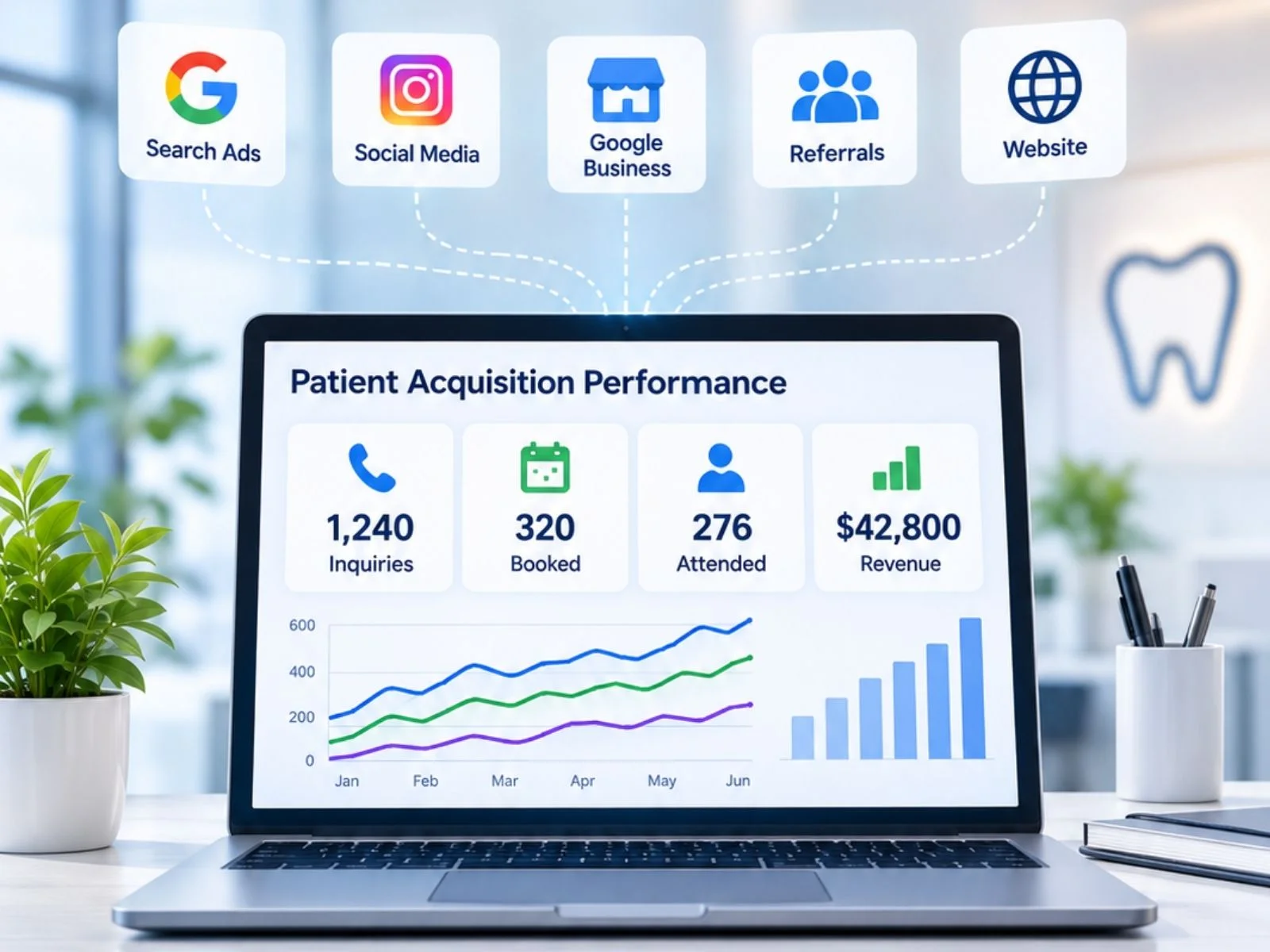
How Do Healthcare Practices Know Which Marketing Campaigns Actually Bring Real Patients?
Your clinic may receive hundreds of clicks and inquiries, but which marketing campaigns produce actual appointments? Understanding that difference helps practice owners invest more confidently.
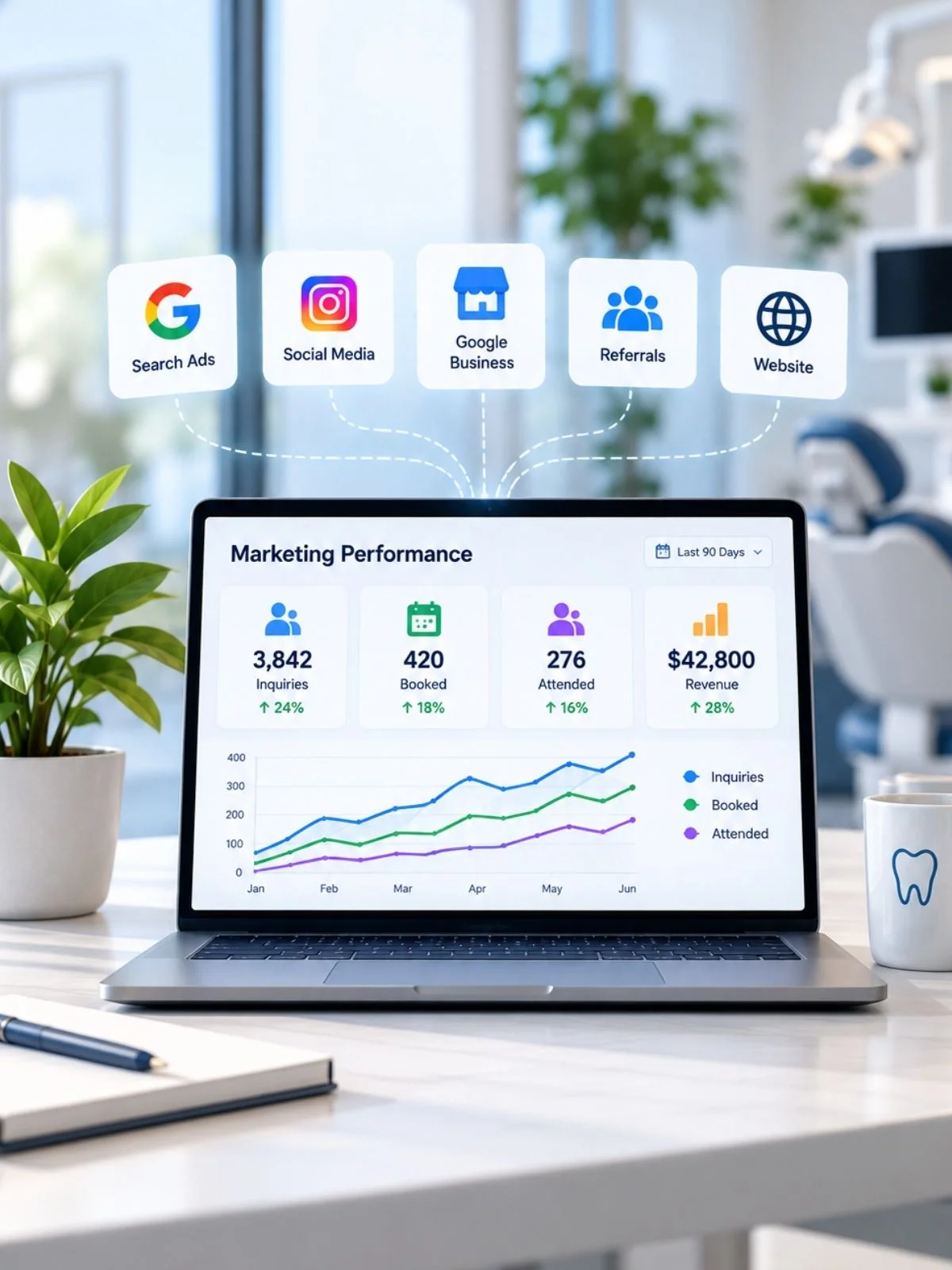
Why Healthcare Marketing Needs Better Patient Conversion Tracking
A dental practice may spend thousands of dollars on Google Ads, search engine optimization, and social media campaigns while receiving a steady stream of calls and online inquiries. Its marketing dashboard shows growing traffic, lower advertising costs, and more leads. Yet the practice manager still cannot answer a basic question: How many of those inquiries became booked appointments?
A campaign can appear successful because it generates activity, even when the front desk struggles to reach patients, appointment requests remain unresolved, or callers never complete the scheduling process.
The challenge becomes more complicated when patients interact with several communication channels. Someone might discover a clinic through Google Search, visit its website, call the front desk, and schedule an appointment later through another interaction. Without consistent lead source tracking and appointment reporting, the connection between marketing activity and actual patient acquisition becomes difficult to understand. Practices need visibility into what happens after the initial inquiry, including whether staff respond, patients schedule, and appointments are attended. That information makes marketing decisions more useful.
“Healthcare marketing performance should be evaluated beyond traffic and lead volume. The most meaningful reporting connects patient interest with documented appointment outcomes, while recognizing that clinical revenue, patient experience, and marketing attribution require additional context.”
Borna healthcare marketing measurement perspective


Seven Strategies to Identify Marketing Campaigns Bringing Patients
Healthcare practices can improve marketing accountability by connecting lead sources, communication workflows, appointment outcomes, and financial reporting.
Track Where Every Patient Inquiry Begins
Before evaluating marketing performance, healthcare practices need to identify where patient inquiries originate. Common sources include organic search, Google Ads, Google Business Profile, social media, referrals, and website visits. Tracking methods such as campaign-tagged URLs, dedicated call tracking numbers, and form source fields can help connect inquiries to specific campaigns. For example, a dental practice may discover that paid advertising generates more inquiries, while organic search produces a higher percentage of booked consultations. Accurate lead source tracking helps practice owners understand which marketing channels attract patients who are more likely to schedule appointments.
Consistent lead source tracking connects inquiries with marketing channels.

Connect Incoming Calls with Appointment Outcomes
A marketing campaign can generate qualified patient inquiries without producing actual appointments. Someone may call during a busy period, reach voicemail, or disconnect before speaking with staff. When practices measure only incoming calls, they may overestimate campaign success. AI call intelligence and healthcare workflow automation can help organize call information, identify patient intent, and highlight unresolved requests. Connecting these communication records with scheduling outcomes gives managers a clearer understanding of which inquiries become appointments. It also helps distinguish marketing performance problems from operational issues such as missed calls, delayed responses, and inconsistent follow-up.

Measure Booked Appointments Instead of Leads Alone
A lead represents patient interest, but a booked appointment demonstrates that the inquiry has progressed toward care. Healthcare practices should measure both rather than assuming higher lead volume automatically produces better patient acquisition results. For example, one campaign might generate 100 inquiries and 15 appointments, while another generates 60 inquiries and 24 appointments. Although the first campaign attracts more leads, the second achieves a higher booking conversion rate. Tracking these differences helps clinic managers evaluate lead quality, scheduling effectiveness, and patient communication. This approach makes marketing reports more meaningful by focusing on measurable appointment outcomes instead of activity alone.
Leads show interest, but booked appointments show progress toward care.

Calculate Cost Per Booked Patient Appointment
Cost per lead can indicate advertising efficiency, but cost per booked appointment provides a more useful measure of patient acquisition performance. Healthcare practices can calculate this metric by dividing campaign expenditure by the number of appointments attributed to that campaign. For example, a dental clinic spending $2,400 on advertising and generating 30 booked appointments has an advertising cost of $80 per booking. Managers should also consider agency fees, canceled appointments, and attended visits when evaluating overall acquisition costs. Comparing these figures across campaigns helps practices identify where marketing investments are producing stronger appointment outcomes without assuming every booking generates equal revenue.

Identify Where Patient Conversions Break Down
Marketing campaigns may successfully attract prospective patients, while communication gaps prevent those inquiries from becoming appointments. Calls can go unanswered, scheduling requests may remain unresolved, or patients might not receive timely follow-up. Improving patient acquisition requires understanding where these interactions break down. For example, if a Google Ads campaign produces many calls but relatively few bookings, managers should examine call handling, response times, and appointment availability before increasing advertising spend. Addressing these operational barriers helps practices improve patient conversion through better communication, structured follow-up, and more accessible scheduling workflows.
Explore Practice Automation →
Compare Marketing Performance Across Practice Locations
Healthcare organizations operating multiple locations need consistent reporting to understand how marketing performs across different offices. Each location may experience different patient demand, staffing capacity, appointment availability, and competition. A campaign producing strong results at one dental clinic may generate fewer bookings at another. Practice managers should compare inquiries, booking conversion rates, cost per appointment, and attended visits by location. Standardized definitions are essential because reporting appointment requests at one office and confirmed bookings at another creates misleading comparisons. Consistent healthcare analytics and dental practice automation workflows can help leadership identify performance differences and determine where marketing or operational improvements are needed.

Connect Appointment Reporting with Marketing ROI
Booked appointments are an important marketing outcome, but they do not automatically represent completed visits or collected revenue. Healthcare practices need to connect campaign spending with appointment attendance and attributable financial results to evaluate marketing ROI more accurately. A simplified ROI calculation compares attributable revenue with marketing investment, although contribution margin provides a stronger measure of profitability. Managers should also account for canceled visits, treatment acceptance, patient acquisition costs, and longer decision periods for certain services. Combining reliable appointment reporting with financial information helps healthcare decision-makers understand which campaigns contribute to practice growth and where additional investment may be justified.

“A marketing campaign does not become valuable simply because it generates clicks. Its operational value becomes clearer when a practice can connect inquiries with appointments, attendance, and appropriate financial outcomes using consistent measurement rules.”
Campaign measurement becomes more useful when practices evaluate patient interest, scheduling progress, attendance, and responsible financial context together.
How AI Changes Healthcare Marketing Performance Reporting
AI-assisted workflows can improve the consistency of communication records and reduce manual reporting work, but they do not automatically establish complete marketing attribution.
Hover or tap each card to flip
Lead source tracking
Separate channel reports
Lead source tracking
More organized source information
Incoming calls
Manual call log reviews
Incoming calls
AI-assisted summaries and context
Missed inquiries
Voicemail review
Missed inquiries
More visible unresolved interactions
Lead qualification
Manual interpretation
Lead qualification
Organized available caller intent
Appointment reporting
Separate scheduling reports
Appointment reporting
Better-connected workflow information
Callback tracking
Notes and staff reminders
Callback tracking
Structured follow-up visibility
Conversion analysis
Manual data comparison
Conversion analysis
Easier identification of workflow patterns
Campaign comparisons
Multiple disconnected dashboards
Campaign comparisons
More consistent reporting inputs
Multi-location visibility
Office-specific spreadsheets
Multi-location visibility
Standardized reporting workflows
Marketing ROI
Manual financial reconciliation
Marketing ROI
Better-organized data for ROI analysis
Privacy review
Review tracking configurations
Privacy review
Human review remains required
AI can improve the information available for analysis, but practices still need accurate attribution, reliable scheduling records, and financial data. Technology supports the reporting process. It does not eliminate the need to verify results.
Where Healthcare Marketing Analytics Still Need Human Oversight
AI can improve marketing reporting and reduce manual work, but healthcare practices still need accurate data, patient privacy safeguards, and human judgment to make reliable decisions.
Marketing Attribution Is Not Always Exact
Patients often interact with multiple marketing channels before scheduling an appointment. Someone may discover a clinic through social media, search for it on Google, and later call directly. Attribution reports help identify campaign performance, but they may not capture every interaction influencing a patient's decision. Practice managers should use these insights alongside appointment data to evaluate marketing effectiveness.
Patient Privacy Must Guide Tracking Decisions
Healthcare practices must protect patient information when using marketing analytics tools. According to the U.S. Department of Health and Human Services (HHS), HIPAA rules apply when tracking technologies collect or disclose protected health information. Advertising pixels, website analytics, and third-party integrations can create privacy risks if sensitive patient data is shared improperly. Practices should review tracking configurations, vendor agreements, and applicable privacy requirements before implementing marketing measurement tools.
Appointments Do Not Guarantee Revenue
A booked appointment does not always lead to a completed visit or collected revenue. Patients may cancel, reschedule, or miss appointments, while treatment values can vary significantly. Marketing reports should distinguish booked appointments, attended visits, and financial outcomes. Tracking these stages helps practice owners understand which campaigns contribute to meaningful patient acquisition and stronger marketing ROI.
AI Reporting Still Depends on Accurate Data
AI healthcare automation can organize information and simplify reporting, but inaccurate data can still produce misleading results. Duplicate leads, incorrect campaign tags, and incomplete appointment records may distort performance metrics. Healthcare teams should maintain consistent tracking methods and regularly review their reports. Human oversight remains essential when interpreting results, adjusting marketing budgets, and identifying opportunities for improvement.
“Reliable healthcare marketing analytics combines accurate tracking, responsible AI automation, and human expertise to turn campaign data into better business decisions.”
Why AI Search Is Changing Healthcare Marketing Attribution
Patients increasingly research healthcare services through search engines, maps, and AI-assisted discovery experiences. These interactions can make attribution more complicated because a patient may encounter a practice before visiting its website or clicking a traditional advertisement.
For example, someone may learn about a dental clinic through an AI-generated response and later search directly for its phone number. The eventual call might appear as a direct or branded-search interaction, even though earlier discovery influenced the decision. Practices should therefore consider both measurable conversions and the limitations of source attribution when assessing search visibility.
Define qualified inquiries consistently across every marketing channel.
Track booked appointments separately from initial patient inquiries.
Review missed calls and unresolved follow-up requests regularly.
Compare appointment acquisition costs using consistent campaign expenses.
Reconcile scheduled visits with attendance and financial records.
Protect patient information throughout marketing attribution and reporting.

How Borna Supports Better Patient Acquisition Visibility
Borna is an AI-powered healthcare communication and practice automation platform designed to help practices manage what happens after patients make contact. Through Borna Connect and Borna Care, teams can organize calls, review AI-assisted conversation summaries, manage follow-up needs, and support scheduling and other administrative steps. These capabilities provide useful operational context for evaluating patient inquiries and appointment workflows, while dedicated marketing attribution and ROI calculations still require appropriately connected campaign, scheduling, and financial data.
AI call intelligence: Helps staff understand available conversation context without repeatedly reviewing complete call recordings.
Missed-call visibility: Supports identifying patient inquiries that need attention after an unanswered interaction.
Follow-up management: Helps teams organize unresolved requests and maintain clearer responsibility for patient communication.
Patient chat and SMS: Offer additional ways for patients and staff to continue administrative conversations.
Online scheduling and digital forms: Support the steps patients may need to complete before their visits.
Connected administrative workflows: Bring communication, scheduling, forms, and payments into a more coordinated patient experience.
Frequently Asked Questions About Healthcare Marketing ROI Tracking
These answers explain how practices can measure marketing outcomes and identify opportunities to improve patient conversion.
Start by tracking where inquiries originate and connecting those records with confirmed appointment outcomes. Campaign-tagged URLs, call tracking, form attribution, and scheduling records can help establish the connection. However, a marketing lead should not automatically count as an acquired patient. Practices should separately report inquiries, booked appointments, attended visits, and new patients. Reviewing these stages makes it easier to identify which campaigns generate interest and which produce measurable operational outcomes. Consistent attribution rules are especially important when patients contact the clinic through several channels before scheduling.
Clicks show that someone interacted with an advertisement or search result. Leads indicate that someone expressed interest. Neither confirms that a patient scheduled or attended an appointment. A campaign may produce inexpensive leads that rarely convert because the inquiries are poorly qualified or the clinic cannot respond promptly. Conversely, a campaign with fewer inquiries may produce more booked consultations. Evaluating lead quality, booking rates, appointment costs, and attendance provides a more complete picture. Practices should use clicks and leads as early indicators, not as substitutes for patient acquisition results.
Cost per booked appointment measures how much marketing investment is associated with generating scheduled appointments. Divide the relevant campaign expenditure by the number of appointments attributed to that campaign. For example, $3,000 in campaign spending divided by 30 bookings equals $100 per booked appointment. Practices should specify whether expenses include advertising only or also agency fees and related costs. They should also distinguish booked appointments from attended visits. This metric is useful for comparing campaigns, but it does not independently establish profitability or patient lifetime value.
Dental practices can begin by connecting marketing sources with inquiries, appointments, completed visits, and attributable financial outcomes. They should track advertising and marketing expenses alongside relevant revenue or contribution margin. An implant consultation campaign may have a different conversion cycle and financial profile from a preventive dentistry campaign, so direct comparisons require context. Practices should also account for cancellations, incomplete treatment, and delayed collections. Dental practice automation can help organize administrative workflows, but reliable ROI reporting still depends on accurate campaign attribution, clinical scheduling records, and financial information.
AI can help organize available communication information, summarize conversations, and identify requests that still need follow-up. These capabilities can reduce the administrative work involved in reviewing patient interactions. However, AI does not automatically know which marketing campaign produced an inquiry or whether the patient attended an appointment. That requires properly configured tracking and connected records. An AI healthcare operations platform may support the communication side of the process, while marketing and financial systems provide additional information. Practices should verify which integrations and reporting capabilities are actually available before assuming they have end-to-end attribution.
A useful report should show campaign expenditure, inquiries, qualified leads, booked appointments, attended visits, booking conversion rates, and appointment acquisition costs. Where reliable financial data is available, managers can also review attributable collections or contribution margin. Results should be segmented by channel, location, service category, and reporting period when appropriate. Operational measures such as missed calls, response delays, and unresolved follow-up requests can help explain why leads do not become bookings. Managers should establish consistent definitions so that reports remain comparable across campaigns and over time.
Missed calls can create a gap between marketing performance and actual scheduling outcomes. A campaign may generate genuine interest, but if an incoming call is unanswered and never recovered, the inquiry may not progress. Recording missed interactions and follow-up status helps managers distinguish between weak lead quality and communication problems. AI-assisted summaries and structured follow-up workflows can help staff understand available context and identify unresolved requests. These improvements support more complete operational reporting, although measuring the campaign's contribution still requires appropriate lead source attribution.
Borna helps healthcare practices organize the communication and administrative steps that occur after patients reach out. Borna Connect supports AI-assisted call handling, call intelligence, summaries, SMS, chat, and follow-up management. Borna Care supports online scheduling, digital forms, payments, and patient chat. Together, these capabilities can make unresolved requests easier to identify and routine patient steps easier to manage. For full marketing ROI reporting, practices also need campaign source information, appointment attendance data, and financial records from appropriate systems. Borna's role is to strengthen the communication workflow rather than claim to replace every analytics or financial platform.
Turn Marketing Inquiries Into Measurable Patient Growth
Healthcare marketing becomes easier to evaluate when practices look beyond clicks and lead counts. Understanding which inquiries become booked appointments, which visits are completed, and where communication breaks down helps owners make more informed decisions. Borna supports the patient communication and administrative workflows that influence those outcomes, helping staff respond, follow up, and move patients toward their next steps. Explore how connected workflows can support your practice.