Patient Communication

Why Do Clinics Miss Calls Even When the Front Desk Is Fully Staffed?

A fully staffed front desk can still miss patient calls when competing responsibilities, unpredictable call volume, and disconnected communication workflows demand employees' attention at the same time.

Borna TeamSeptember 202611 min read
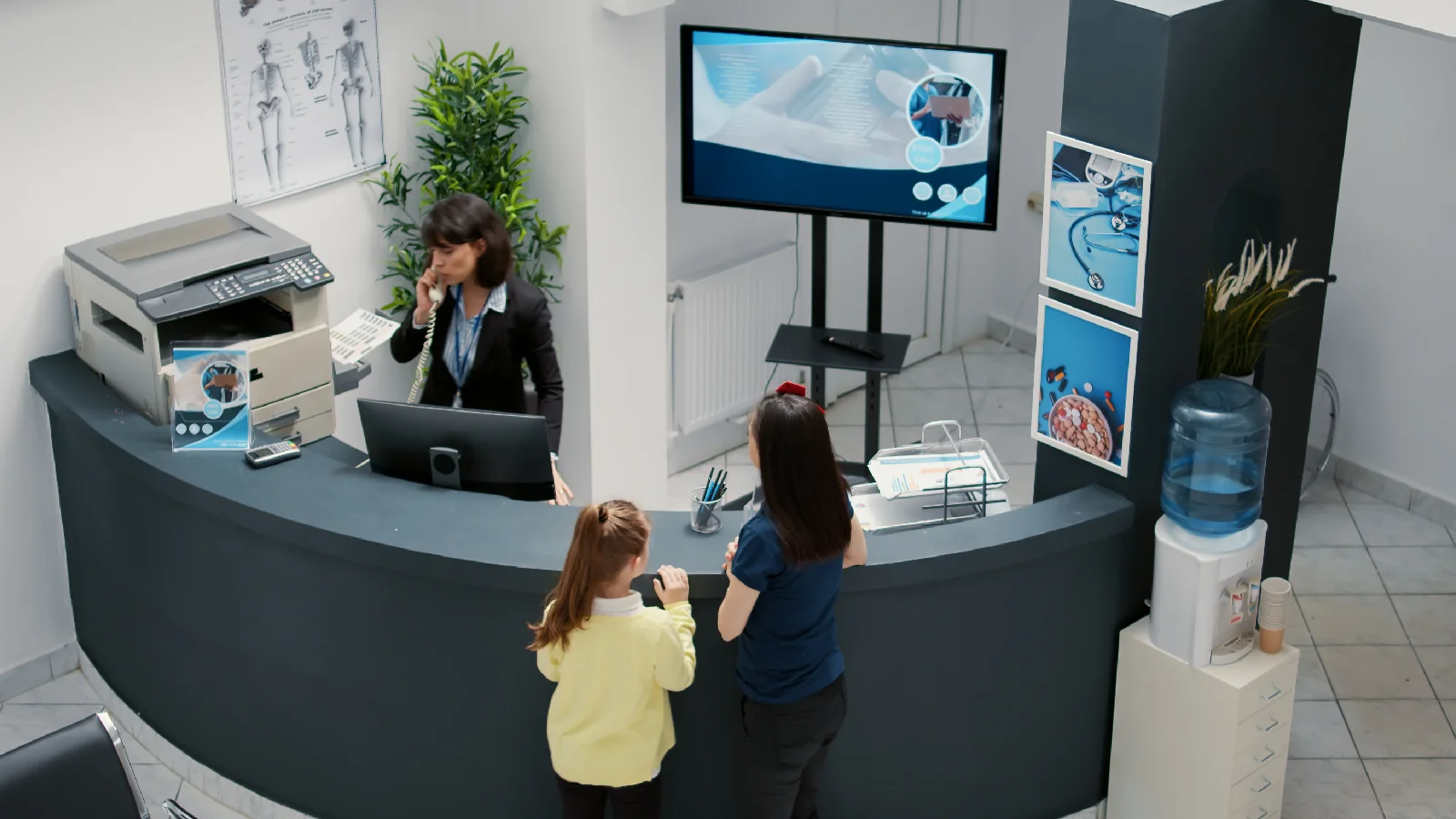
Clinic reception desk with a receptionist on the phone while patients wait at the counter
  • Published:September 28, 2026
  • Author:Borna Team
  • Category:Healthcare Operations · Patient Communication · AI Automation
Why Calls Get Missed

Why Staffed Clinics Still Struggle With Incoming Patient Calls

A ringing phone is only one of many responsibilities competing for a healthcare front desk's attention. Staff may be checking in patients, scheduling appointments, answering questions, collecting payments, processing digital or paper forms, coordinating with providers, and responding to messages at the same time. Even when every scheduled employee is present, there may be moments when nobody can immediately answer another incoming call. This is why missed calls should not automatically be interpreted as a staffing failure. In many clinics, the underlying issue is a mismatch between communication demand and the workflow available to manage it.

Call demand is also rarely distributed evenly throughout the day. Several patients can call within the same few minutes, particularly around opening time, lunch periods, appointment reminders, or the end of the workday. New patients may call immediately after finding a practice through Google, Maps, an AI assistant, an advertisement, or a referral. Existing patients may need scheduling changes, billing help, forms, or answers to administrative questions. A front desk that comfortably handles normal call volume can quickly reach capacity when several interactions arrive at once.

Technology fragmentation adds another layer of complexity. Calls may operate separately from online scheduling, forms, SMS, patient chat, payments, and follow-up processes. Employees then spend additional time switching between systems and reconstructing what each patient needs. When a call is missed, the practice may know that someone called without having a clear process for identifying intent, assigning ownership, or confirming follow-up. Solving the problem therefore requires more than telling staff to answer faster. Clinics need a communication workflow that makes patient requests easier to capture, understand, prioritize, and resolve.
“Telephone contact plays an important role in health care. The efficiency of a telephone contact will shape a patient’s impression of your practice.”

— Agency for Healthcare Research and Quality (AHRQ) (ahrq.gov)
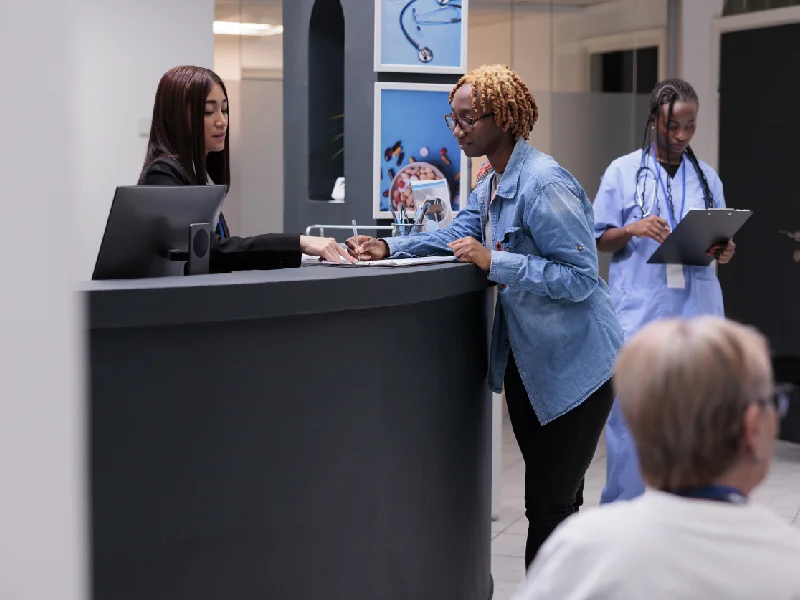
Busy clinic front desk with staff helping patients at the counter
The Benefits

Five Benefits of Understanding Why Calls Get Missed

Understanding the operational causes of missed calls helps clinics improve patient access without automatically assuming that additional staffing is the only solution.

01

Identify High-Pressure Call Periods

Missed-call patterns can show practice managers when communication demand regularly exceeds available capacity. Calls may cluster during morning check-ins, lunch coverage, appointment reminder periods, or late afternoons. Understanding these patterns allows a practice to adjust responsibilities, coverage, and workflows around observed demand instead of relying on assumptions about when the front desk is busiest.

02

Protect New Patient Opportunities

A new patient who calls has already taken an important step toward the practice. They may be ready to schedule or may need one final piece of information before making a decision. An unanswered call does not automatically mean a lost patient, but making missed interactions visible gives staff a better opportunity to reconnect before interest fades. This connection between communication and patient acquisition matters because attracting prospective patients is only part of the process. Practices also need a reliable way to move inquiries toward an appropriate next step.

03

Reduce Repetitive Front Desk Work

Staff lose valuable time when they repeatedly review voicemail, search for caller information, switch between systems, or reconstruct previous conversations. Healthcare workflow automation can organize some of this repetitive administrative work. Employees can receive clearer communication context and spend more of their available time addressing patient needs instead of manually piecing together information.

04

Create Clearer Follow-Up Ownership

A missed call can remain unresolved simply because nobody knows who is responsible for returning it. A structured follow-up workflow can show which interactions are pending, which employee owns the next action, and whether the request was resolved. Practices examining this problem may also benefit from understanding how consistent patient follow-up affects the wider communication journey. The objective is to reduce reliance on memory, handwritten reminders, informal conversations, and assumptions between team members.

05

Understand Why Patients Are Calling

Call volume alone does not explain front-desk pressure. Clinics also need to understand caller intent. Appointment requests, billing questions, service inquiries, scheduling changes, and existing patient needs require different actions. AI call intelligence can help organize available context, giving staff a clearer understanding of what patients need before determining the appropriate next step.

Clinician in a treatment room reading a message on a smartphone
Key Insight

“The goal is not simply answering more calls. It is building a patient communication process where unanswered interactions remain visible, understandable, assigned, and easier for staff to resolve.”

The Risks

Five Risks Behind Unmanaged Missed Patient Calls

Missed calls become more significant when practices lack a consistent process for identifying, prioritizing, and following up on unresolved patient communication.

Doctor on a phone call while working on a laptop in a clinic office

Prospective Patients May Keep Searching

A prospective patient may contact several practices while researching care. If they cannot reach one clinic, they may leave voicemail, try again, use another communication channel, or continue researching other providers. One unanswered call does not guarantee patient loss, but delayed or inconsistent follow-up creates another point of friction during the patient's decision process.

Voicemail Becomes Another Work Queue

Sending every unanswered caller to voicemail does not eliminate the workload. Staff still need to review messages, understand requests, determine priorities, locate relevant information, and return calls. During busy periods, voicemail can simply become another queue competing with patients at the desk, incoming calls, messages, scheduling tasks, forms, and other administrative responsibilities.

Important Call Context Gets Lost

Returning a call without useful context creates additional work for both employees and patients. Staff may need to replay recordings, search notes, or ask callers to repeat information they have already provided. When communication data is fragmented, even straightforward requests can require several steps before employees understand why the patient called and what should happen next.

Follow-Up Depends Too Much on Memory

A staff member may intend to return a call after helping the patient standing in front of them. Several new tasks can arrive before that happens. Without a visible follow-up process, callbacks may depend on individual memory or handwritten notes. Healthcare communication becomes more reliable when unresolved requests remain visible until someone takes responsibility for the next action.

Poor Automation Can Add Friction

Automation is not automatically a better patient experience. A poorly designed system can make patients repeat themselves, follow unnecessary steps, or struggle to reach a person. Sensitive conversations, unusual scheduling situations, complaints, and clinical questions may require human attention. An AI receptionist for healthcare should support routine administrative workflows while providing clear pathways for appropriate human involvement.
Workflow Comparison

Staff-Only Call Management Versus AI-Assisted Communication Workflows

Both models can support patient communication. The difference is how much repetitive organization, tracking, and information management employees must handle themselves.

ComparisonStaff-Only WorkflowAI-Assisted Workflow
Incoming callsStaff manage each interactionAI can support routine call workflows
Missed callsOften routed to voicemailMissed interactions remain more visible
Call reviewStaff replay available recordingsAI summaries provide faster context
Caller intentIdentified manuallyAvailable context can be organized
Callback trackingNotes, lists, or memoryStructured follow-up workflow
Task ownershipOften communicated informallyResponsibility can be made clearer
After-hours inquiriesUsually wait for reopeningRequests can be captured for review
SchedulingStaff coordinate routine requestsDigital scheduling can support staff
Patient formsManaged as another taskDigital forms reduce manual coordination
Patient messagesMultiple channels need checkingCommunication can be more connected
Workflow visibilityDepends heavily on staff processesPending requests can remain visible
Human involvementStaff handle nearly every stepStaff focus where people add the most value

The stronger approach is not necessarily the one with the most automation. It is the one that helps the clinic handle communication consistently while keeping appropriate human involvement available.

Decision Guide

Choosing the Right Patient Call Management Approach

When Staff-Led Call Management Works Best

  • Incoming call volume remains relatively manageable.
  • Most calls arrive during staffed operating hours.
  • Few patient communication channels require monitoring.
  • Staff can consistently complete required callbacks.
  • Scheduling and administrative workflows remain straightforward.

When AI-Assisted Call Management Makes Sense

  • Calls frequently compete with in-office responsibilities.
  • Missed interactions are difficult to track.
  • Staff spend significant time reviewing call context.
  • Multiple communication channels create fragmented workflows.
  • Managers need better visibility into unresolved requests.
Borna's Approach

How Borna Helps Front Desks Manage Communication Better

Borna is an AI healthcare operations platform designed to help practices connect patient communication with routine administrative workflows. Instead of treating calls, follow-up, scheduling, forms, messages, and payments as unrelated tasks, the platform helps organize the steps surrounding patient interactions. The objective is not to remove front-desk employees. It is to reduce repetitive administrative friction and give teams better visibility into what patients need and what still requires attention.

  • AI-assisted call handling supports routine patient communication while preserving appropriate pathways for staff involvement.

  • AI call summaries give employees faster context without requiring them to repeatedly review complete conversations.

  • Follow-up management helps unresolved patient requests remain visible instead of relying primarily on staff memory.

  • SMS and patient chat provide additional communication options beyond traditional incoming and outgoing phone conversations.

  • Online scheduling and digital forms help patients complete routine administrative steps with less staff coordination.

  • Digital payments connect another common patient task with a more unified administrative experience.

Clinic staff member holding a smartphone in a treatment room
AI Search Visibility

Build Patient Access for an AI-Driven Search Journey

Patient access now begins well before someone reaches the front desk. Prospective patients may discover a clinic through Google Search, Google Maps, online reviews, advertisements, local directories, referrals, or AI assistants. They can compare providers, research services, check office information, and decide whom to contact within a relatively short period. Practices therefore need to think about what happens after digital visibility generates an inquiry. Ranking well is valuable, but discovery alone does not create a smooth patient journey.

SEO, AEO, and GEO strategies can help a practice become easier to discover and understand across traditional and AI-powered search experiences. Operational readiness matters just as much after that discovery. If a patient finds the practice, calls, receives no answer, and encounters an unclear next step, some of the value created through marketing may never translate into a meaningful patient interaction. Patient acquisition increasingly depends on both digital visibility and a dependable communication experience after a prospective patient decides to act.

Google SearchGoogle MapsAI AssistantsOnline ReviewsLocal Directories

Keep phone numbers and office hours consistently accurate online

Explain appointment options clearly on relevant service pages

Answer common patient questions using direct, useful language

Provide alternative digital pathways for appropriate patient requests

Keep missed inquiries visible until follow-up is completed

The objective is a connected journey from discovery to communication. Practices should make it easy for patients to understand what they can do next, regardless of how they initially find the clinic.

FAQ

Frequently Asked Questions About Missed Calls in Clinics

Practical answers about missed calls, front-desk capacity, AI support, workflow automation, and patient communication.

Front-desk presence does not guarantee immediate phone availability. Employees may simultaneously be checking patients in, answering another call, scheduling appointments, collecting payments, handling forms, communicating with providers, or addressing questions from patients already inside the clinic. Several calls can also arrive at the same time. This creates short periods when communication demand exceeds available capacity even though the practice is appropriately staffed. Clinics can better understand the problem by reviewing when calls are missed, what other tasks occur during those periods, and whether unresolved calls enter a reliable follow-up process rather than evaluating staffing levels alone.

Connected Front Desk

Turn a Busy Front Desk into a Connected Workflow

Missed calls do not necessarily mean your clinic needs more people. They may reveal where communication demand, repetitive tasks, and disconnected workflows are competing for the same staff attention. Borna helps healthcare teams organize calls, summaries, follow-up, scheduling, forms, chat, SMS, and payments so front-desk employees can focus more effectively on patients and interactions that benefit from personal attention.

  • Connected Communication
  • AI-Assisted Workflows
  • Human Involvement
Internal References: Borna patient acquisition, consistent patient follow-up, and practice automation resources borna.ai