Miami Urgent Care Reduced Weekly Front-Desk Workload by 35%
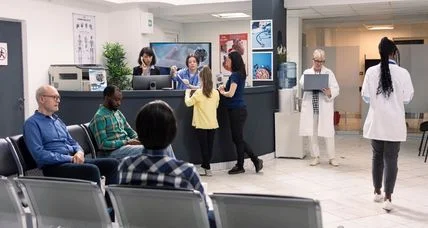
By lunchtime, Dr. Sofia Ramirez could usually see the pressure building at Harbor Point Urgent Care. Phones were ringing while patients checked in, staff reviewed forms, appointment questions waited for answers, and unfinished follow-ups competed with the immediate needs of a busy Miami clinic.
Instead of simply adding more administrative work, the clinic used Borna to simplify several repetitive patient-facing workflows. Within 90 days, the illustrative weekly administrative workload fell from 31 hours to 20 hours, giving the front desk more time to focus on patients requiring direct attention.

Supporting Growth Without Overloading the Team
Harbor Point Urgent Care had built steady patient demand, but Dr. Ramirez wanted growth to remain manageable for the people running the clinic each day. Her front-desk employees were responsible for far more than answering phones. They helped patients schedule, handled forms, reviewed communication, tracked unfinished requests, and supported patients arriving for care. The goal was to simplify routine administrative work without reducing the human involvement patients still needed.
Routine Tasks Were Consuming the Workday
The pressure was most visible during peak periods. A patient could arrive while another person called with a scheduling question, someone else needed help with paperwork, and yesterday's unresolved communication still required attention.
A workflow review estimated that the team spent approximately 31 staff hours each week across repetitive scheduling, forms, communication review, and follow-up activities. About 23 patient-related tasks regularly carried into the following business day.
Dr. Ramirez tried redistributing responsibilities and creating designated periods for callbacks and paperwork. The changes helped temporarily, but the same tasks remained. Moving work between employees was not the same as reducing it.
Small Tasks Created a Larger Workload
The clinic's administrative pressure did not come from one major process. It came from routine tasks repeatedly requiring manual staff involvement.
| Current State | Why It Limited Growth |
|---|---|
| Scheduling requests frequently required front-desk assistance. | Routine booking needs competed with patients already inside the clinic. |
| Forms required staff coordination before visits. | Employees spent time helping patients complete administrative steps. |
| Missed calls required later review. | Staff had to return to conversations after immediate patient care slowed. |
| Follow-ups were tracked manually. | Outstanding patient requests could remain unresolved between busy periods. |
| Communication context required repeated review. | Staff spent additional time determining what had already happened. |
Together, these activities created constant task switching. The clinic was busy because patients needed care, but too much employee time was being consumed by the administration surrounding that care.
More Staff Wasn't the Only Answer
One afternoon, Dr. Ramirez watched an employee move from checking in a patient to answering a scheduling call, then return to an unfinished follow-up before helping another patient with paperwork. The employee was working efficiently, but the workflow itself was creating the pressure. Dr. Ramirez realized the better question was not, “How can the team work faster?” It was, “Which routine steps should require less staff effort?”
Reducing Repetitive Front-Desk Work
Borna was introduced as an AI healthcare operations platform supporting the clinic's patient-facing workflows alongside its existing systems.
Simplify Scheduling
Borna Care's online scheduling gave patients a digital way to view available appointment times and manage appropriate booking activities without requiring every request to begin at the front desk.
Digitize Patient Forms
Digital forms helped move appropriate paperwork into a structured patient workflow, reducing the amount of manual coordination surrounding routine form completion.
Capture Call Context
Borna Connect's call intelligence provided transcripts and AI-generated summaries for supported interactions, helping staff understand conversations without repeatedly reconstructing their context.
Organize Follow-Ups
Follow-up management made conversations requiring additional action easier to identify, reducing dependence on separate lists, memory, and repeated manual review.
Less Administrative Pressure in 90 Days
The illustrative results showed that improving several repetitive workflows could reduce administrative pressure without removing staff from important patient interactions.
Weekly Administrative Workload
Less Routine Staff Work
Tasks Carried Into Next Day
Follow-Up Completion Rate
The biggest difference was not that the front desk became less important. It became less occupied by repetitive coordination. Staff recovered time for patients who needed direct assistance, fewer unfinished tasks carried into the next day, and Dr. Ramirez had greater confidence that clinic growth did not automatically have to mean adding the same amount of administrative work.
“Our team didn't need another list of tasks. We needed routine work to stop consuming so much of their day.”
Reduce Work Without Removing Human Care
Harbor Point Urgent Care's front-desk burnout was not caused by one difficult responsibility. It came from dozens of routine administrative steps competing for attention throughout the day. Improving those workflows gave employees more room to focus on patients instead of continually moving between disconnected tasks.
Within 90 days, illustrative weekly administrative workload declined from 31 hours to 20 hours, while follow-up completion improved from 68% to 89%. For Dr. Ramirez, healthcare workflow automation was not about replacing her team. It was about making their workload more sustainable.
Frequently asked questions
Disclaimer: Practice names, individuals, location-specific details, and performance figures are hypothetical and illustrative to protect client confidentiality.