Slow Lead Response: How an Austin Dental Clinic Booked More New Patient Consultations
Dr. Olivia Bennett was investing steadily in bringing new patients to Barton Creek Dental, her growing Austin practice. Interest was coming in, but too many prospective patients were waiting for a response while her team balanced existing patients, appointments, and daily administrative responsibilities. By the time some inquiries received attention, the opportunity to start a conversation had already weakened.
The marketing was creating interest, yet Dr. Bennett could see that generating inquiries was only half the challenge. Prospective patients often wanted quick answers and clear next steps. Without a consistent process for capturing their intent and responding promptly, valuable opportunities could stall before a consultation was ever scheduled.

Delayed Responses Were Costing New Opportunities
Patient Interest Was Losing Momentum Quickly
A review of one month's activity showed approximately 84 new patient inquiries, including appointment-related calls arriving during busy periods. The average initial follow-up took about 3.8 hours, while 21 inquiries remained unresolved beyond the same business day. Only 34% progressed to booked consultations. Dr. Bennett became concerned that the practice was investing successfully in attracting prospective patients but lacked a sufficiently consistent communication process once those patients made contact.
The team experimented with callback blocks, shared lead lists, and assigning new inquiries to specific employees. Each approach improved organization temporarily, but response speed still depended on how busy the front desk became. Staff needed to review the original interaction, determine what the prospective patient wanted, and then decide how to respond. Dr. Bennett recognized that generating more leads would accomplish little if the communication workflow could not move existing opportunities forward efficiently.
What changed
| Metric | Before | After |
|---|---|---|
| New patient inquiries | 54/month | 89/month |
| Average initial response time | 3.8 hours | 1.2 hours |
| Same-day follow-up completion | 75% | 92% |
| Inquiries with identified intent | 63% | 94% |
| Consultation booking rate | 34% | 46% |
Creating a Faster Path to Consultation
AI Call Handling
Configured unanswered calls could move to the AI auto attendant, helping capture why prospective patients were contacting the dental practice.
Intent Identification
Patient intent could be identified and categorized, helping employees distinguish appointment inquiries from billing, rescheduling, and other communication needs.
Conversation Summaries
AI-generated summaries provided concise interaction context, reducing the time staff needed to understand what prospective patients had already discussed.
Follow-Up Workflow
Structured follow-up status made outstanding communication easier to recognize, helping employees identify prospective patients still waiting for an appropriate next step.
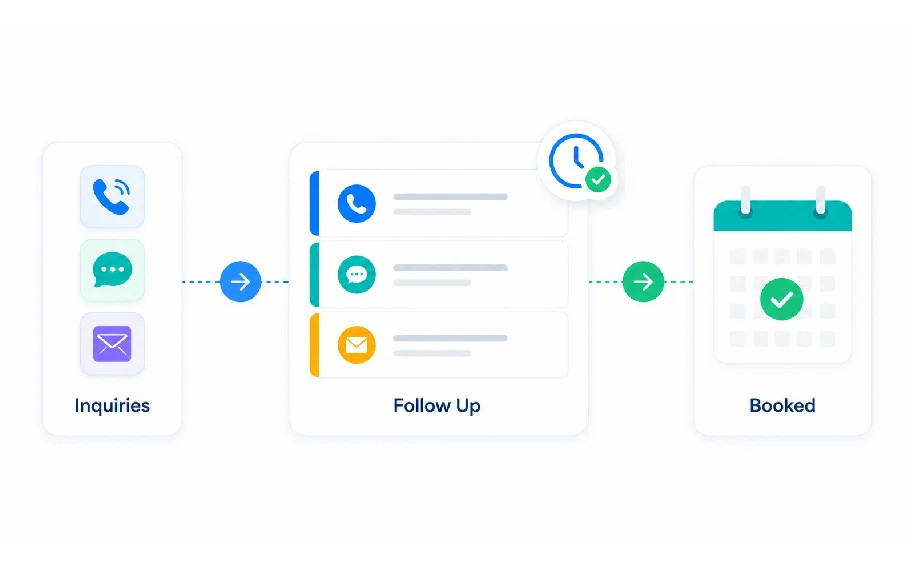
The new workflow addressed the period between initial patient interest and staff availability. Instead of beginning every callback without context, employees could understand why the prospective patient contacted the practice and what action might be required. This helped make follow-up more purposeful without removing staff from important conversations.
For Dr. Bennett, the improvement also changed how she viewed patient acquisition. Marketing could bring people to the practice, but communication determined whether those opportunities progressed. By creating a more structured response process, the clinic could make better use of existing demand before increasing its investment in generating additional inquiries.
What the work produced
Faster Initial Patient Response
Inquiries With Identified Intent
Same-Day Follow-Up Completion
Higher Consultation Booking Rate
“We were already generating patient interest. The real improvement came from creating a better process for responding while that interest was fresh.”
Within 90 days, Barton Creek Dental created a more structured path from initial inquiry to consultation. Response times improved, more inquiries received same-day attention, and consultation bookings increased without requiring a comparable increase in lead volume. For Dr. Bennett, the lesson was clear: attracting prospective patients mattered, but having a reliable process for moving their interest toward the next step mattered just as much.
Frequently asked questions
Disclaimer: The clinic, doctor, and location-specific details in this case study are hypothetical and illustrative, created to demonstrate a realistic healthcare workflow while respecting client confidentiality.